

End U.S.-led wars, Defend Sovereignty and the Environment
The Center for Environmental Concerns–Philippines (CEC) stands in solidarity with people across the world in the commemoration of Earth Day. This annual occasion is a continuing reminder of our collective responsibility to protect ecological balance, defend human rights related to the environment, and challenge systems that drive ecological destruction and social injustice.
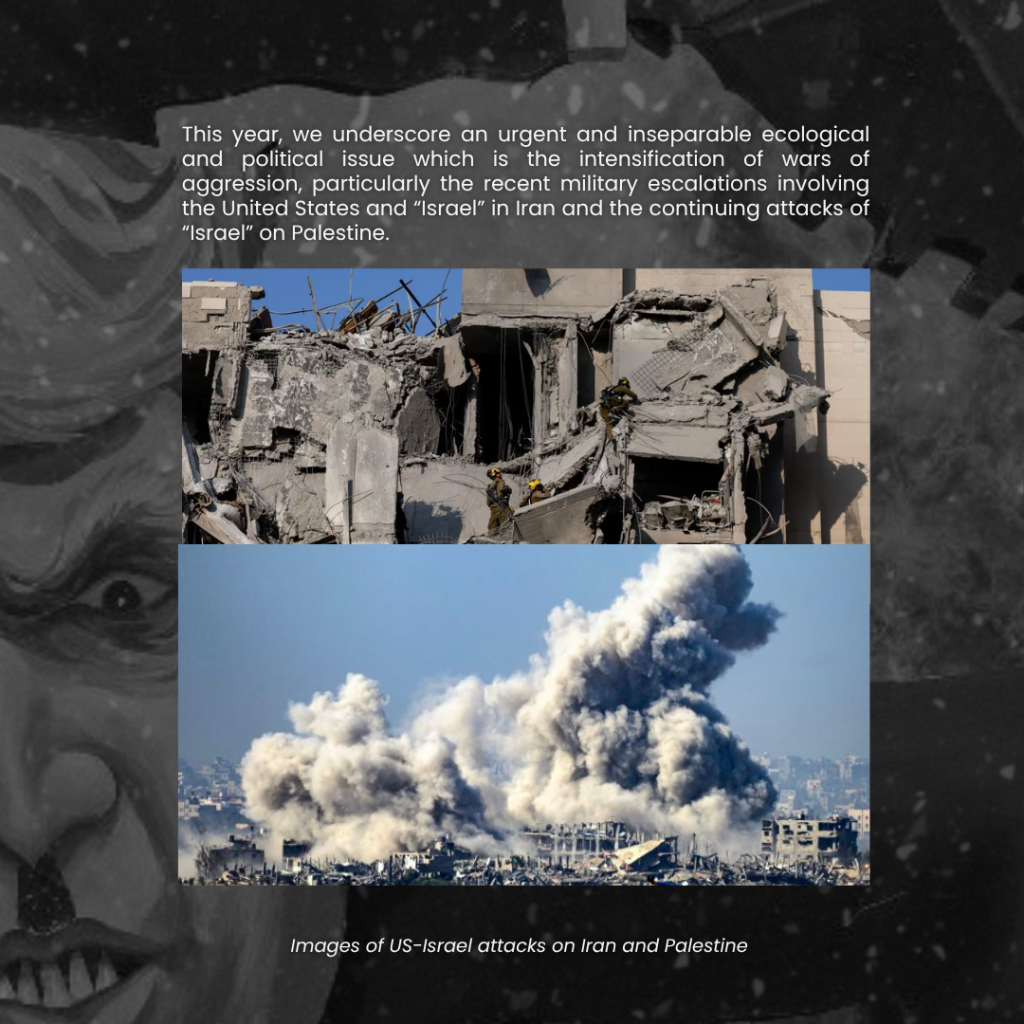
This year, we underscore an urgent and inseparable ecological and political issue which is the intensification of wars of aggression, particularly the recent military escalations involving the United States and “Israel” in Iran and Lebanon, and the continuing attacks of “Israel” on Palestine.
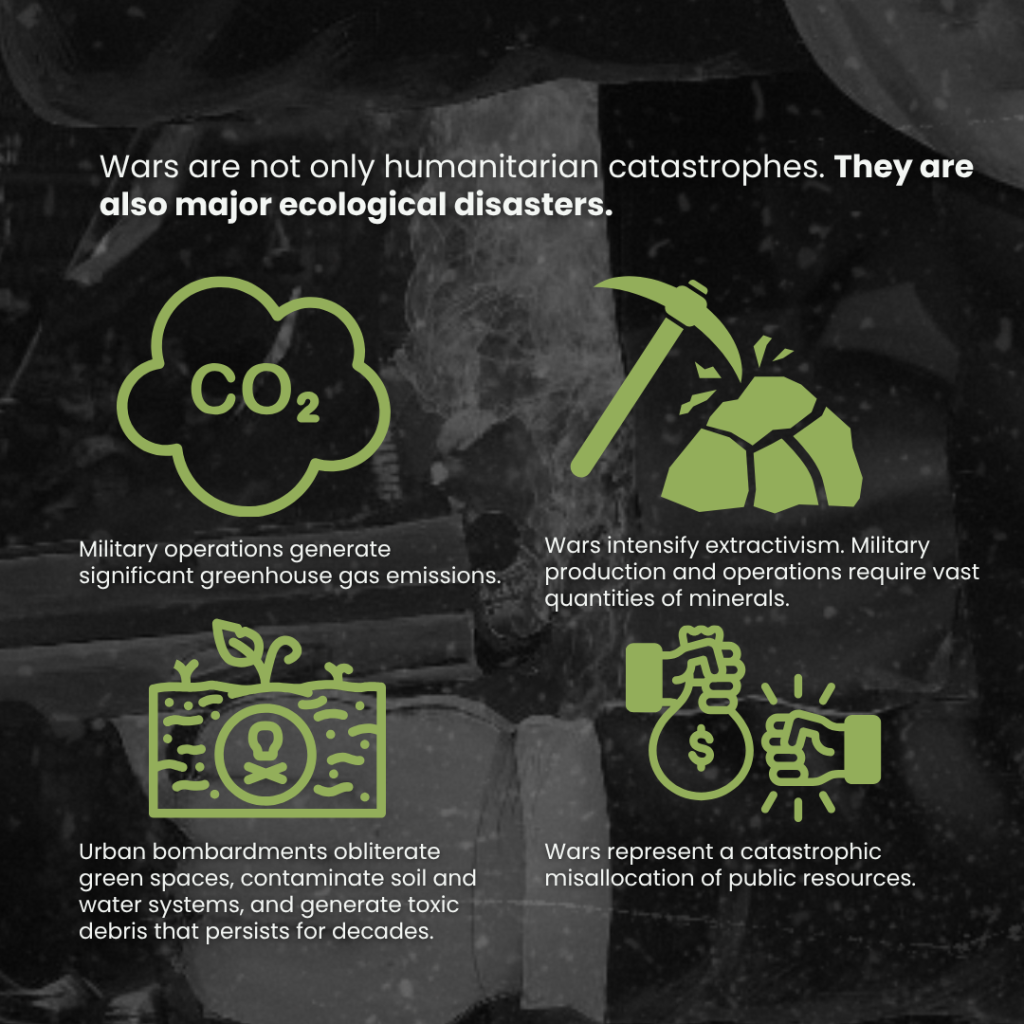
Wars are not only humanitarian catastrophes. They are also major ecological disasters.
First, military operations generate significant greenhouse gas emissions. The U.S. military is widely recognized as the single largest institutional consumer of fossil fuels in the world. During the “War on Terror,” military activities alone have been estimated to produce billions of tons of CO₂ equivalent emissions, contributing substantially to global warming.¹
Recent conflicts have further intensified this impact. Studies and investigative reports show that modern warfare—through airstrikes, munitions, supply chains, and reconstruction demands—produces emissions comparable to entire industrialized countries. For example, the ongoing destruction in Gaza has been estimated to generate tens of thousands of tons of carbon dioxide in just weeks, with long-term reconstruction expected to exponentially increase this footprint.²
Second, wars directly destroy ecosystems. Urban bombardments obliterate green spaces, contaminate soil and water systems, and generate toxic debris that persists for decades. The destruction of civilian infrastructure also leads to long-term environmental health crises, including hazardous waste accumulation and air pollution.
Third, wars intensify extractivism. Military production and operations require vast quantities of steel, oil, minerals, and rare earth elements. This drives increased mining and fossil fuel extraction which are activities already linked to deforestation, biodiversity loss, and the displacement of indigenous peoples and rural communities worldwide.³
Finally, wars represent a catastrophic misallocation of public resources. Trillions of dollars spent on military budgets could instead be invested in climate adaptation, ecosystem restoration, public health, education, and sustainable livelihoods. The climate crisis cannot be solved while the global economy continues to prioritize militarization over human and ecological survival.
The Philippines is structurally integrated into U.S. military strategy through long-standing agreements such as the Visiting Forces Agreement (VFA) and the Enhanced Defense Cooperation Agreement (EDCA).
These arrangements carry significant ecological and social costs.
Military exercises in the country contribute to greenhouse gas emissions through fuel-intensive air and naval operations. They also disrupt ecosystems in training sites and coastal areas, affecting biodiversity and fisheries that communities depend on for survival.
In addition, expanded access to Philippine bases and territories for foreign troops leads to restrictions on local land and marine use, undermining the livelihoods of farmers, fisherfolk, and Indigenous communities. The environmental impacts are therefore inseparable from economic impacts.
Even in the absence of formal permanent bases, the continuous presence of foreign troops under recurring exercises places the Philippines within the logistical footprint of global military operations—effectively making it vulnerable to geopolitical tensions and retaliatory risks tied to U.S.-led wars.
History shows that collective action can challenge even the most entrenched military arrangements. The Filipino people were able to successfully push out U.S. military bases in 1991, demonstrating that sovereignty and peace are achievable through organized resistance.
Today, we are called to renew that struggle under contemporary conditions.
CEC calls on the Filipino people and the global community to:
- Demand an immediate end to wars of aggression led and supported by the U.S. other imperialist countries.
- Hold state actors accountable for war crimes and environmental destruction, including pursuing justice through international mechanisms such as the International Criminal Court and other multilateral bodies
- Reject US wars of aggression, economic sanctions and blockades, and foreign military intervention;
- Demand the pull-out of all US military troops, weapons and facilities in EDCA sites and other US military facilities in the Philippines;
- Assert the urgent termination of the VFA, EDCA, and all similar agreements that enable foreign military presence in the Philippines.
- Work for an independent foreign policy and a peaceful international order based on mutual respect, justice, national sovereignty, the right to self determination, and international law.
- Redirect public resources away from military spending toward climate action, ecological rehabilitation and conservation, and social services.
Earth Day must be a day of action not only for environmental protection, but for social justice, liberation and the dismantling of systems that destroy both people and the planet.
References:
1. Neta C. Crawford, Pentagon Fuel Use, Climate Change, and the Costs of War, Watson Institute for International and Public Affairs, Brown University (2019). https://watson.brown.edu/costsofwar/papers/ClimateChangeandCostsOfWar
2. Stuart Parkinson et al., Carbon Footprint of the Gaza Conflict and Reconstruction, Scientists for Global Responsibility / related analyses summarized in The Guardian reporting on war emissions (2024). https://www.theguardian.com/environment/2024/feb/09/carbon-footprint-gaza-war-climate-impact
3. Oliver Belcher et al., Every Conflict Leaves a Carbon Footprint: Military Operations and Global Emissions, Nature Communications (2022). https://www.nature.com/articles/s41467-022-xxxx-x
4. United Nations Environment Programme (UNEP), Environmental Impact of Armed Conflict, UN Reports and Environmental Assessments. https://www.unep.org/explore-topics/disasters-conflicts/what-we-do/disaster-risk-reduction/environmental-damage-conflicts